Achieve Optimal Health with Reiki
Welcome to Reiki
What is Reiki?
Reiki originated in Japan by Mikao Usui who was the father of a this form of energy medicine and spiritual practice. The knowledge/awakening came to him after a 21-day fast and meditation on Mount Kurama near Kyoto in 1922.
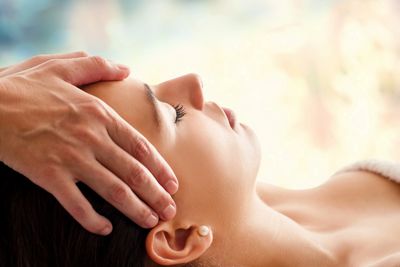
Reiki is an energy healing technique aimed at reducing stress and promoting relaxation by balancing the body’s "life force energy" through light, non-invasive touch or by holding hands just above the body. While not a substitute for conventional medical treatment, it is used in hospitals to aid in pain management, reducing stress and emotional well-being. Reiki is not tied to any religious dogma even though it is spiritual in nature.
How Reiki Works
- Energy Flow: Practitioners act as conduits for "universal life energy," which passes through their hands to the client, removing energy blockages.
- Relaxation Response: Sessions typically induce deep relaxation, helping the body’s natural healing capabilities.
- Distance Healing: Reiki can be performed in person or sent remotely to individuals, as practitioners believe energy transcends space.
- Self Healing: Reiki can be used by the practitioner for self healing just like for Reiki sessions on others.
- Clearing Negative Energy: Reiki maybe used for clearing negative energies from spaces in houses, rooms and any areas needing negative energy removal.
- Pet & Animal Healing: Reiki maybe used for pet healing and animal healing. Pets respond very well to this type of healing process because they don't have the intellect like humans that may get in the way of their body's response.
Typical Reiki Session but Not Limited
- Setup: Recipients lie fully clothed on a massage table comfortably, then I use a pendulum to test how the chakras are functioning.
- Process: The practitioner places hands gently on or near the body, often targeting areas like the head, shoulders, back, or limbs. I do offer Reiki drumming, singing bowls and Panda drumming if needed.
- Duration: Sessions generally last between 30 and 90 minutes.
The Five Principles of Reiki
Reiki is guided by five core principles intended to promote spiritual and emotional health:
1. Just for today, I will not anger.
2. Just for today, I will not worry.
3. Just for today, I will be grateful.
4. Just for today, I will do my work honestly.
5. Just for today, I will be kind to every living thing.
Training and Levels
Reiki practitioners are trained through a process of attunements, usually consisting of three levels:
- Level I (First Degree): Focuses on self-healing and the basics of energy transfer.
- Level II (Second Degree): Allows practitioners to send distance Reiki and learn specific kanji symbols.
- Level III/Master (Third Degree): Trains practitioners to become masters and learns how to teach Reiki to others. Learns the master kanji symbol.
Benefits and Considerations
- Benefits: Clients often report decreased pain, improved sleep, reduced anxiety, and increased feelings of peace.
- Safety: It is non-invasive and considered safe for all ages.
- Limitations: It is considered a complementary therapy, not a cure for illnesses.